
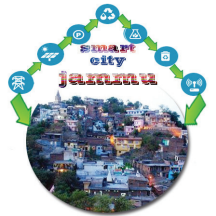

Decision aimed at expanding role in wider urban development
Arvind Sharma
JAMMU Tawi, Sept 20: The people of Jammu and Srinagar can expect the two Smart City companies to assume a broader role in urban development following a decision by the Jammu and Kashmir Government to strengthen their institutional structure.
The Government has reconstituted the Boards of Directors of Jammu Smart City Limited (JSCL) and Srinagar Smart City Limited (SSCL) as part of efforts to establish a permanent, Union Territory-owned institutional framework for urban development, official sources informed the Northlines.
The revised arrangement is aimed at providing the Government with greater direct oversight while expanding the role of the two companies beyond their traditional Smart City mandate.
Instead of functioning primarily as city-specific Special Purpose Vehicles (SPVs), JSCL and SSCL are being repositioned as broader platforms for integrated urban development at the divisional level, the sources said.
For Jammu, the reconstituted JSCL Board will include senior representatives from key departments and agencies, including Finance, Housing and Urban Development, Planning, the Divisional Commissioner, Traffic Police, Jammu Municipal Corporation, Jammu Development Authority, J&K Housing Board, Urban Local Bodies and the Katra Development Authority.
The Administrative Secretary, Finance Department, has been designated as Chairman of the JSCL Board, giving the Finance Department a central role in the new institutional framework.
The expanded representation is expected to facilitate closer coordination among departments and agencies dealing with urban infrastructure, transport, planning, housing and civic services.
For residents, the restructuring could mean that major urban development initiatives are pursued through a more coordinated Government-led mechanism rather than through isolated projects.
The move also reflects a broader shift in the Government’s approach to urban development in Jammu and Kashmir. With JSCL and SSCL being given a wider institutional mandate, their role is no longer confined to implementing projects under the Smart Cities Mission but is being aligned with the broader requirements of planned urban growth.
The reconstitution follows the Cabinet decision to establish a permanent UT-owned institutional framework for urban development, with the objective of creating stronger and more sustainable mechanisms to address the evolving needs of Jammu and Srinagar and their wider urban regions.
The new structure is significant as it brings multiple departments and development agencies within a common institutional framework, potentially enabling greater coordination in the planning and execution of future urban development projects.