
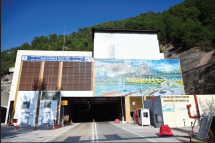

JAMMU TAWI, Nov 24: In an innovative initiative that brings together modern infrastructure and cultural heritage, the National Highways Authority of India (NHAI) has transformed the portals of the Dr Syama Prasad Mookerjee Tunnel, popularly known as the Chenani-Nashri Tunnel, into a vibrant showcase of Jammu and Kashmir’s spiritual, architectural and historical legacy, besides its immense tourism potential.
The portals of the strategically important tunnel along National Highway-44 have been adorned with captivating murals depicting some of the most iconic religious, historical and tourist destinations of Jammu and Kashmir, offering travellers a glimpse into the region’s diverse cultural identity and natural splendour.
The artistic installations feature the sacred Amarnath Cave, Shri Mata Vaishno Devi Shrine, Shankaracharya Temple, Raghunath Temple, historic Mubarak Mandi Palace, picturesque Dal Lake and the iconic Mughal Gardens, capturing the essence of Jammu and Kashmir’s centuries-old heritage.
The murals also depict modern highway infrastructure, symbolising the region’s journey towards improved connectivity, infrastructure development and economic progress while preserving its distinctive cultural identity.
Moving beyond conventional highway development, the initiative seeks to transform major infrastructure assets into platforms for cultural promotion and tourism awareness. The beautification of the tunnel portals reflects an approach where infrastructure serves not merely as a means of connectivity but also as a medium for celebrating regional heritage.
The initiative assumes significance as the Chenani-Nashri Tunnel serves as a vital link between Jammu and the Kashmir Valley, facilitating the movement of pilgrims, tourists, commercial vehicles and daily commuters.
By showcasing prominent destinations along this crucial highway corridor, the NHAI aims to encourage travellers to explore the Union Territory’s spiritual centres, historical monuments and natural attractions, thereby contributing to the promotion of tourism.
The artistic makeover also presents a compelling convergence of development and heritage, demonstrating how modern engineering and cultural preservation can complement each other.
The initiative reflects NHAI’s commitment to developing aesthetically appealing, commuter-friendly and culturally representative highway infrastructure, while strengthening Jammu and Kashmir’s identity as a destination of spiritual significance, historical richness and unparalleled natural beauty.