
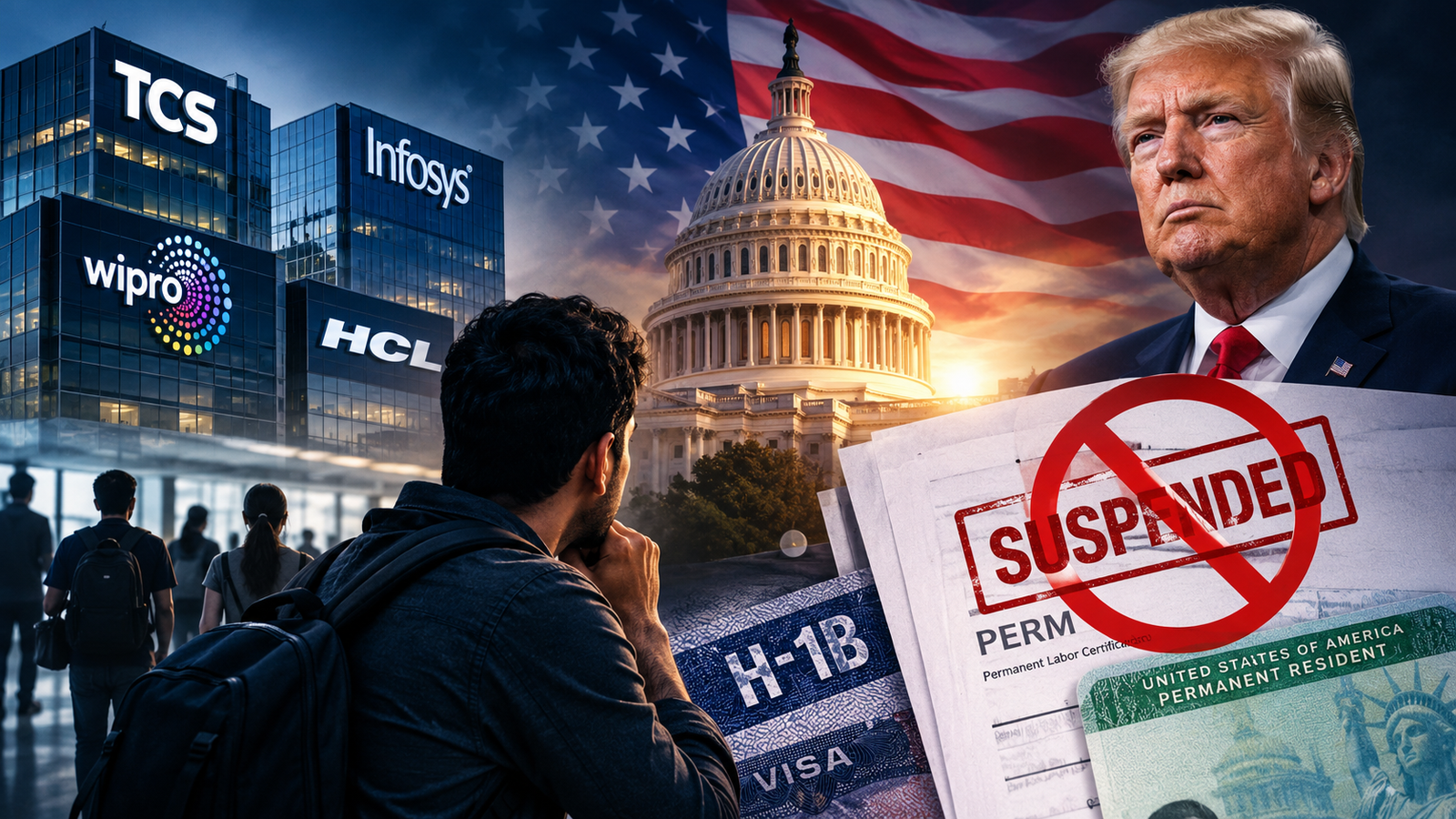
Suspended From Green Card Programme
Washington, Oct 8 (TGE): The United States has suspended several major Indian IT companies, including Tata Consultancy Services (TCS), Infosys, Wipro and HCL Technologies, from the federal programme used by employers to sponsor foreign workers for employment-based permanent residency, in a major escalation of the Trump administration’s crackdown on the US immigration system.
The US Department of Labor announced that it would stop accepting new and processing pending applications under the Permanent Labor Certification (PERM) programme involving the affected companies.
The action also covers Cognizant, Capgemini, Microsoft and Adobe, bringing some of the world’s biggest technology companies under the latest immigration enforcement move. US officials cited concerns over alleged misuse and fraud within employment-based immigration programmes and said the measures were aimed at protecting American workers.
US Labor Secretary Keith Sonderling announced the suspensions alongside Vice President JD Vance and the head of the US Labor Department’s anti-fraud efforts.
“I am hereby suspending from the Permanent Labour Certification Programme some of the largest IT outsourcing firms in the world, Cognizant, Infosys, Tata, Wipro, HCL, and Capgemini,” Sonderling said.
He also confirmed that Microsoft and Adobe were being suspended from the programme.
What Is the PERM Programme?
The Permanent Labor Certification programme, commonly known as PERM, is a key step for many employment-based green card applications in the United States.
Under the process, an employer generally has to demonstrate to the US Department of Labor that there are not sufficient qualified, willing and available American workers for a particular position and that employing the foreign worker will not adversely affect the wages and working conditions of US workers.
Once the labor certification process is completed, an employer can proceed with the relevant employment-based immigration petition.
The latest suspension therefore represents a significant setback for foreign employees whose employers are using the PERM route as part of their path towards permanent residency.
Indian IT Workers Could Feel the Impact
The decision is particularly significant for Indian technology professionals because companies such as TCS, Infosys, Wipro, HCL and Cognizant are among the major employers of Indian skilled workers in the United States.
Many foreign technology professionals work in the US on temporary employment visas, including H-1B visas, while pursuing longer-term employment-based permanent residency.
The suspension, however, does not mean that existing H-1B visas have automatically been cancelled.
Instead, the immediate impact is on the companies’ participation in the PERM process: new applications will not be accepted and pending applications involving the suspended companies will not be processed while the suspension remains in force.
That could delay the green card journey of affected foreign workers and potentially create additional uncertainty for employees who have been waiting for years to progress through the US employment-based immigration system.
US Accuses Companies Of Misusing Immigration System
The Trump administration has increasingly targeted programmes that allow US companies to employ foreign workers, arguing that such programmes have sometimes been used at the expense of American workers.
Vice President JD Vance specifically criticised Microsoft, alleging that the company had laid off thousands of American employees while simultaneously receiving approvals for thousands of H-1B workers and filing thousands of PERM applications.
According to Vance, Microsoft laid off around 6,000 American workers in 2025 but was subsequently approved for more than 6,000 H-1B visas and filed 3,682 PERM applications. He alleged that nearly 1,000 of those applications involved positions similar to jobs from which American workers had been laid off.
The administration has described such practices as evidence that the immigration system may be vulnerable to abuse.
Microsoft has disputed the broader characterisation of its workforce and visa activity, while the latest federal action comes amid continuing scrutiny of major technology employers.
Broader Immigration Crackdown
The PERM suspensions are part of a wider immigration enforcement drive by the Trump administration.
US authorities have also increased scrutiny of the H-1B visa system and other programmes involving foreign students and workers.
On Thursday, US officials separately announced investigations involving nine major American universities, including Harvard, Yale and Stanford, over allegations concerning the use of international students and foreign workers in ways officials say could undercut American wages.
The Labor Department’s Inspector General Anthony D’Esposito said subpoenas had already been issued as part of the investigations.
What Happens Next?
The immediate consequences for affected IT companies and their foreign employees will depend on how long the PERM suspensions remain in place and the outcome of the underlying federal investigations.
For Indian IT professionals already in the United States, the move could mean longer waits and greater uncertainty in their employment-based green card applications, particularly where PERM certification is still pending.
The development is also likely to increase compliance and legal pressures on large technology and outsourcing companies that rely heavily on foreign skilled workers.
The latest action marks one of the most significant moves yet by the Trump administration against major technology companies involved in employment-based immigration and could have wider implications for Indian professionals seeking long-term careers and permanent residency in the United States.- (TGE)